
The Sacred and the Scientific
The SilenceThis theme thread traces the unexpected meeting of religious imagery and scientific language in Diane’s memories and Martin’s imagination.
increasing Bearing strength in each event
 decreasing
Bearing strength in each eventdecreasingA Name in the Dark
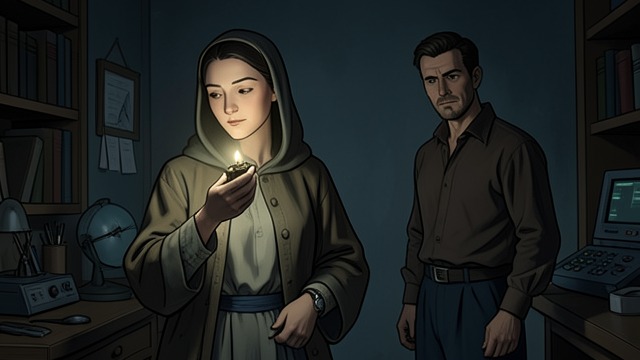
Jesus of Nazareth
Diane’s Prompt
As Max repeats the name Jesus, Diane says “Jesus of Nazareth” and asks Martin what Einstein said about the Nazarene. The name becomes a route into a conversation beyond the immediate outage.
Beauty Without Doctrine
Martin responds to the luminous quality of the name rather than claiming religious belief. The scene treats spiritual imagery as an aesthetic and emotional presence.
The Roman Galleries
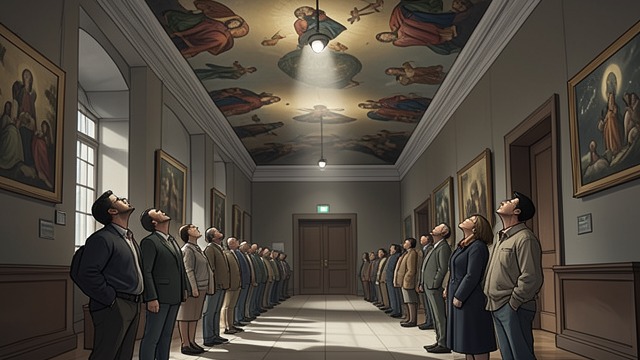
Remembering Painted Ceilings
A Shared Journey
Diane recalls the long galleries of Rome, with tourists listening to audio guides and looking upward at murals. Max is asked to remember a particular palazzo, but his recollection remains partial.
Art as Mental Shelter
The gallery offers a vivid scene when the television is empty. The remembered images provide a common object of attention that the group can inhabit together.
The Tourists Looking Up
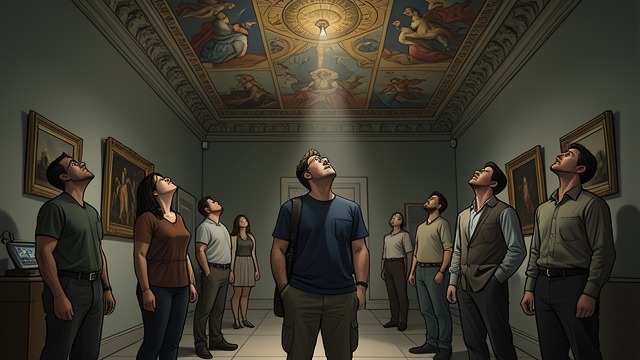
Still Figures in Galleries
Suspended Attention
Diane imagines tourists standing motionless beneath painted saints and angels. Martin echoes the stillness, contributing to a shared reconstruction of people looking at images.
A Counterimage to Screens
The remembered visitors listen to devices but look toward ceilings. Their absorbed posture resembles the group before the blank screen, while its source is art rather than broadcast.
Einstein Enters the Room
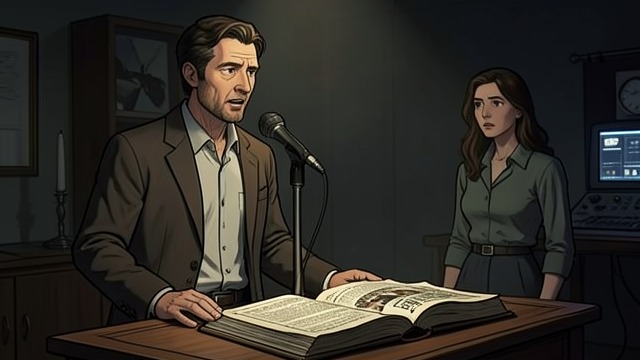
Science as Presence
A Voice of Authority
Martin speaks as though Einstein’s life and ideas can be brought into the room. He names scientists and recalls the manuscript’s language, shifting from English into German.
Reverence and Uncertainty
Diane cannot tell whether the performance is intellectual devotion or a symptom of distress. Scientific authority lends shape to the night without resolving its uncertainty.
Walking with Einstein
A Silent Companion
An Imagined Walk
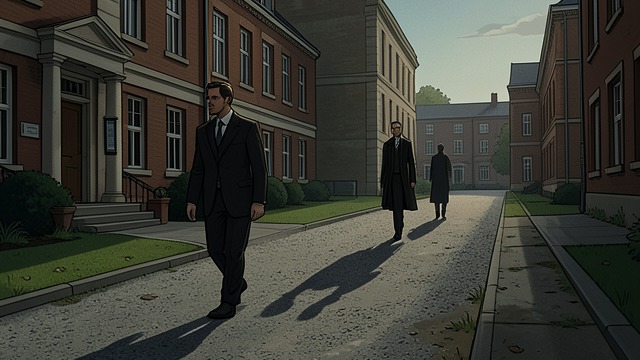
Martin wants to walk with Einstein across the Princeton campus without speaking. The imagined companionship is a quiet alternative to the room’s ceaseless speculation.
Faith in a Human Presence
The wish joins intellectual admiration to a desire for simple company. As spiritual figures and scientific heroes recur, the novel leaves open what kind of presence can comfort people in crisis.
during Max’s first blackout evening
later in the first blackout evening
during the same apartment conversation
after Martin begins speaking in an adopted accent
near the end of Martin’s monologue
